

Capture the character of your street with Street Portraits
What if instead of simply a place to pass through, you paused in your street to notice the light in the trees, the colour of old brick, the birds that visit the powerlines, and the stories held in each doorway?
Right now, most of us move quickly from house to car to work and back again, eyes on our phones or our to‑do lists, barely registering the details that make our street unique. It can feel awkward to linger, to look closely, or to treat everyday surroundings as worthy of attention and celebration, especially if no one else seems to be doing it.
One way to break that spell is to turn small moments of noticing into tiny works of art and acts of connection. Experiment with street portraits: an enticement to slow down, capture the life of your street on paper or on film, and then share them in ways that invite others to see, feel, and care alongside you.
The experiment in joy
Create simple portraits of your street’s living character: trees, plants, birds, colours, textures, doorways, letterboxes, and other details that give your place its particular feel. Using anything from pencils and phone cameras to collage and chalk, you transform everyday scenes into small artworks that help you (and eventually your neighbours) see your surroundings with fresh eyes.
Why it brings streets to life
When you treat your street as a subject for art, you deepen your relationship with it rather than seeing it as a background. Paying attention in this way can increase your sense of care, curiosity, and ease in the place you live, which supports both personal wellbeing and your connection to place.
Sharing these portraits - on your window, fence, or online - creates gentle openings for conversation and shared pride. Over time, these moments can evolve into rituals and gatherings that make the street feel more welcoming, playful, and collectively held.
This experiment brings streets to life by
- 🚶♀️Activating your street
- 🔄Cultivating reciprocity and abundance
How to begin – Ground
Take a slow walk along your street and choose 3–10 “subjects”: a favourite tree, a crack in the pavement full of tiny plants, patterned brickwork, a bird’s perch, or the way light falls on a wall.
Create simple portraits using what you have: quick sketches, phone photos, polaroids, watercolours, rubbings, or mini collages made from found and recycled materials.
Afterwards, pause to notice which details made you smile or feel at home, and what you saw today that you usually miss.
Inspiration to get you started
Community art and nature initiatives in different cities have used simple creative walks and shared displays to help residents notice local biodiversity and co-design greener, more playful public spaces.
Neighbourhood storytelling and joy-focused projects have shown that when people regularly share small creative acts, it can spark wider participation, civic pride, and a stronger sense of shared ownership over local places.
Case study 1 – Inside Out Project (global)
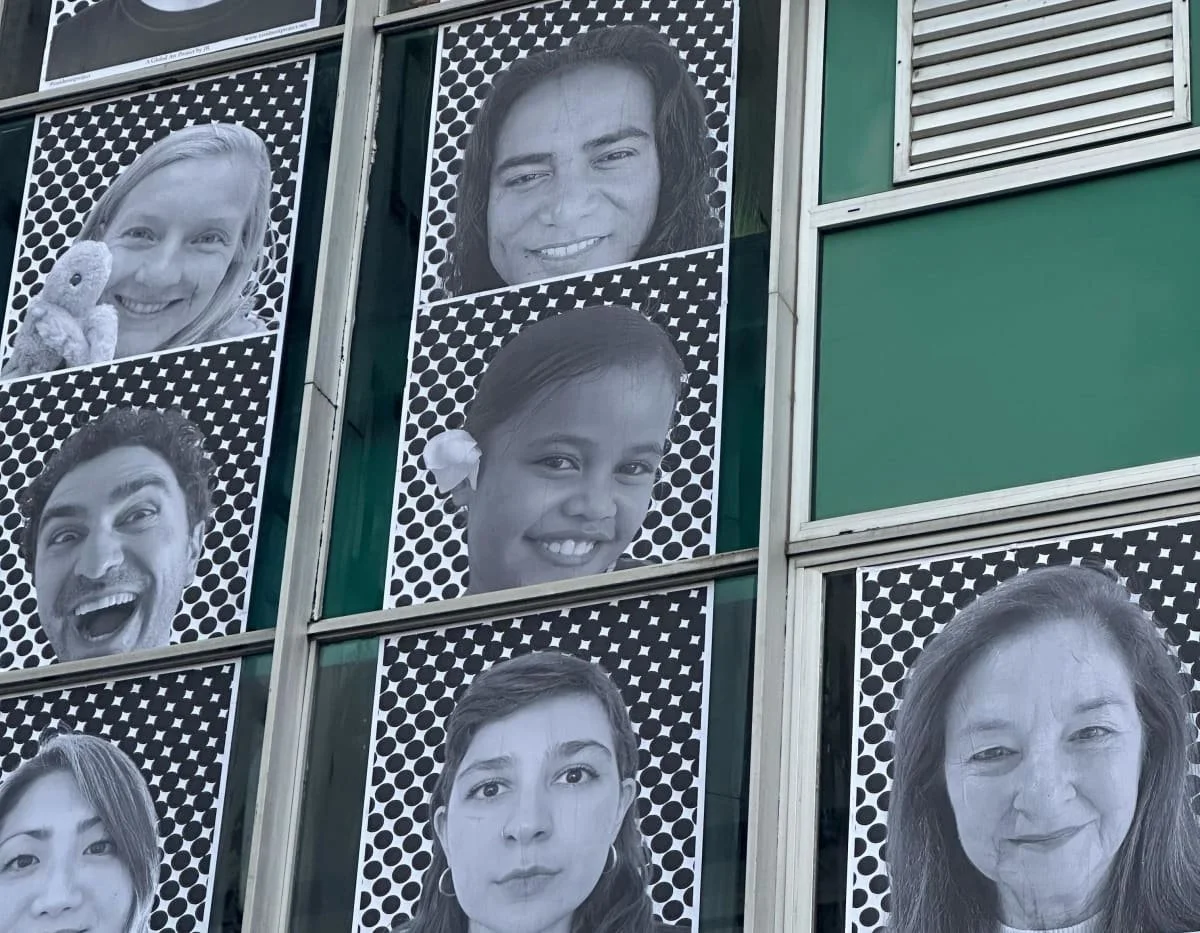
Portraits of Tuvalu residents displayed on a building.
Source: Inside Out Project
French artist JR’s Inside Out Project imagines streets as open-air galleries where large black-and-white portraits give everyday people visibility and voice. Many communities felt their stories were invisible in public space and that art belonged only in formal institutions, not on their own walls. The project invited locals to take simple portraits, print them large, and paste them onto buildings and streetscapes as a collective artwork. In more than 2,000 actions across 138 countries, communities have used this process to celebrate diversity, spark conversations, and reclaim public spaces as places that reflect the people who live there.
Case study 2 – Nature Journaling in the City (Melbourne, Australia)
Nature journaling helps people slow down and really see the life in their streets, parks and local green spaces. Simple workshops combine short walks with easy sketching and note‑taking prompts so even beginners can capture what they notice without needing to be “good at art,” creating personal records of connection to place. In Melbourne, the City of Melbourne’s Citizen Forester program and local educators like Nothing Like Nature have offered nature journaling sessions that invite residents to observe trees, birds and seasonal changes more closely in their own neighbourhoods.
Sources:
Nature Journaling (City of Melbourne Citizen Forester program)
Nature Journaling | Nothing like Nature | Melbourne (Visit Nothing like Nature’s website for upcoming workshops)
Case study 3 – Front-yard and Window Galleries
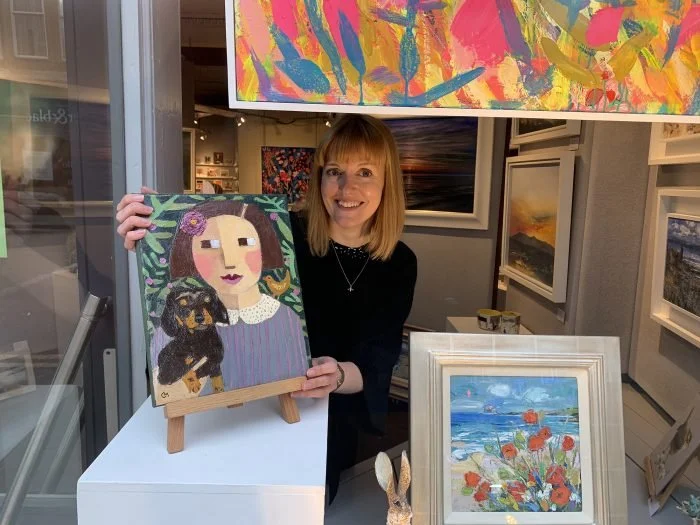
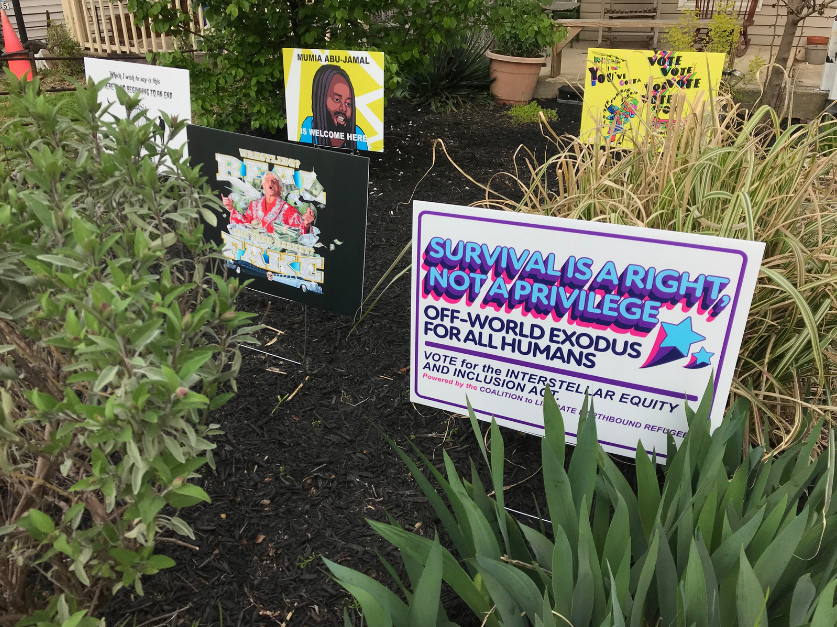
During COVID-19 lockdowns, residents in places like Philadelphia and Edinburgh turned their front yards and windows into small, street-facing galleries so neighbours could safely share and view art. Traditional galleries were closed and people felt isolated, with few opportunities to encounter creativity or each other in everyday life. Households were invited to hang drawings, paintings, and small installations in windows, on fences, and in front gardens, often following loose themes or open calls. These improvised galleries encouraged neighbours to walk, look, and talk, creating gentle contact, local pride, and a shared sense that ordinary streets could hold beauty and culture.
Sources:
Gather momentum – Share
Choose a simple way to share a few favourite portraits: in your front window, on your fence, near your letterbox or in a small photo collage you can send to neighbours.
Add a short note such as: “Street Portraits – I’m painting tiny scenes from our street. What’s one small thing here that makes you smile?”
Invite neighbours (including kids) to make their own portraits in any style – drawing, collage, rubbings or photos.
Offer help to those who need it to bring their stories to life.
Let it take root – Flourish
Co-create a “living street gallery” by gathering portraits from several households and displaying them along the street: on fences, verandahs, trees, letterboxes, or windows.
Let people know when there are new works to see and encourage them to take a slow wander. This ongoing exhibition becomes a co‑created record of your street’s life and character, evolving as the seasons and participants change.
If you’d like an easy online home for your street portraits, you can also create a private shared album using any photo app you already use (for example Google Photos or iCloud Photos).
Repeat the experiment each season (autumn textures, winter light, spring creatures, summer colours) so your gallery becomes an evolving record of how your street changes and thrives over time.
Go further – resources and inspiration
You can deepen this experiment by exploring nature-based art practices, community arts, or local creative projects that blend walking, noticing, and making. Look for examples of neighbourhood photo walks, nature-portrait workshops, or window-gallery trails in other communities and adapt ideas that fit your street’s character, climate, and culture.
Reflect:
Every portrait is a small act of attention, and every act of attention helps you reframe your street as a living, shared home full of character, memory, and possibility, rather than simply a route between “real” destinations.
You might like to reflect: What details on my street feel like “old friends” now? What has surprised me? What feels possible here that didn’t before?
More ways people are turning streets into galleries
All over the world, people are turning streets, windows, fences, and tiny boxes into galleries, journals, and trails of creative noticing. Here are just a few.
Window Wanderland (UK and beyond) – A project that supports neighbourhoods to turn their windows into illuminated galleries, creating walking trails of home-made window art that connect communities at night.
Free Little Art Galleries (global) – Tiny, often street-facing galleries where anyone can leave or take miniature artworks, inspired by Little Free Libraries and now mapped in hundreds of locations around the world. (see also: Our Story | Discover Creative Opportunities — Front Porch Gallery | A non-profit community-art space and gallery Carlsbad, CA). An online map that helps people find and contribute to tiny outdoor art galleries in their area, showing how many small creative acts are already enlivening ordinary streets.
Window art trails and “Neighbourhood Window Walk” (Edmonton, Canada and Melbourne) – During COVID-19, neighbours coordinated themes (hearts, rainbows, animals) and filled their windows with art so families could go on socially-distanced “treasure hunts” around their streets.
Nature journaling communities (global / Australia) – Groups like Citizen Forester’s nature journaling workshops in Melbourne (run by Nothing like Nature) and online communities such as Nature Journaling Australia and the Nature Journal Club invite people to sketch and write about local nature as a way to deepen care for place.
If you know of other projects that belong in this little index, or if your street starts its own version, share a link or story so it can be added to the list. Share your own moments in the comments or on Instagram with #Streetjoy and tag @StreetMakerLaura.
The long-term dream is to create an interactive map where we can all “drop a pin” for our street portrait projects and related experiments in joy, so we can see how many streets are quietly coming to life together.